Guitar has always been the messenger of rock and roll. That is the voice, the bullhorn, the call to arms and the foundation of rock and roll. I've always been incredibly enamored and taken by it, before I could even play." In this episode, Ernie Ball artist Paul Stanley discusses his influences, playing in KISS, and his guitar strings.
String Theory
Paul Stanley
KISS
Recent Episodes
All Episodes
-
Adam Granduciel - The War on Drugs
-
Albert Lee
-
Andy McKee
-
Bassel Hallak
-
Bethany Cosentino - Best Coast
-
Bobb Bruno - Best Coast
-
Butch Walker
-
Chris Broderick - Act of Defiance
-
Christian Adameit
-
Chris Vega
-
Claudio Sanchez - Coheed and Cambria
-
Clay Cook - Zac Brown Band
-
Clint Black
-
Cory Wong - Vulfpeck
-
Courtney Barnett
-
Daron Malakian - System Of A Down
-
Dave Navarro - Jane's Addiction
-
Dhani Harrison - thenewno2, Fistful of Mercy
-
Don Felder
-
Dustin Kensrue - Thrice
-
Ed Roland - Collective Soul
-
Frank Iero - My Chemical Romance
-
Hanne Kah
-
Hannes Kelch
-
Hootie & the Blowfish
-
Ilan Rubin - Nine Inch Nails, Angels & Airwaves, The New Regime
-
Jacky Bastek
-
Jade Puget - AFI
-
Jason Isbell
-
Jason Richardson
-
Jerry Cantrell - Alice in Chains
-
Jesse Hughes - Eagles of Death Metal
-
Jim Adkins - Jimmy Eat World
-
J Mascis - Dinosaur Jr.
-
Joe Bonamassa
-
Joe Don Rooney - Rascal Flatts
-
John Myung - Dream Theater
-
Johnny Marr - The Smiths
-
John Petrucci - Dream Theater
-
Josh Carter - Phantogram
-
Justin Chancellor - TOOL
-
Kai Stuffel
-
Kenny Wayne Shepherd - Kenny Wayne Shepherd Band
-
Kirk Hammett - Metallica
-
Kurt Vile
-
Laura Jane Grace - Against Me!
-
Lindsey Troy - Deap Vally
-
Lissie
-
Lzzy Hale & Joe Hottinger - Halestorm
-
Mac DeMarco
-
Mark Holcomb - Periphery
-
Mick Mars - Mötley Crüe
-
Mike Dirnt - Green Day
-
Mike Herrera - MxPx
-
Neal Schon - Journey
-
Nick Hexum and Tim Mahoney - 311
-
Orianthi
-
Paul Gilbert - Racer X, Mr. Big
-
Paul Stanley - KISS
-
Pete Wentz
-
Petey USA
-
Phil Manansala<br>& Alan Ashby - Of Mice & Men
-
Rebecca Lovell & Megan Lovell - Larkin Poe
-
Rex Brown - Pantera, Down, Kill Devil Hill
-
Richie Faulkner - Judas Priest
-
Rick Springfield
-
Robin Finck - Nine Inch Nails
-
Shaun Morgan - Seether
-
Shavo Odadjian - System Of A Down
-
Stephen Carpenter - Deftones
-
Steve Lukather - Toto
-
Steve Morse - Deep Purple
-
Steve Stevens - Billy Idol
-
Steve Vai
-
Synyster Gates<br>& Zacky Vengeance - Avenged Sevenfold
-
The White Buffalo
-
Thomas Blug
-
Tim Henson - Polyphia
-
Tim McIlrath - Rise Against
-
Tom DeLonge
-
Tom Dumont - No Doubt, Dreamcar
-
Tosin Abasi
-
Tyler Bryant
-
Walter Schreifels
-
Zac Carper - Fidlar
Transcript
Paul Stanley:
Guitar has always been the messenger of rock and roll. That is the voice, the bull horn, the call to arms and the foundation of rock and roll. I mean I've always been incredibly enamored and taken by it even before I could ever play.
Paul Stanley:
I was blessed that I grew up around very diverse music. My parents are European, and music is much more important to people in Europe. It really started more on the acoustic guitar. Not coincidentally, when we saw Elvis playing those early shows, he was playing a Martin.
Paul Stanley:
I was always taken with the idea of rhythm and the percussive-ness and that you could lead with the rhythm. For me, being a rhythm player was never a stepping stone to being a lead player. Too often people either forgo spending time learning and understanding rhythm playing and think that it's more important to know how to solo. Surprisingly or not so much I can remember there were guys, there were kids who were very flashy on lead guitar, but as soon as you ask them to, "Okay, now back me up," they were lost. I think you can spend a lifetime working on your rhythm.
Paul Stanley:
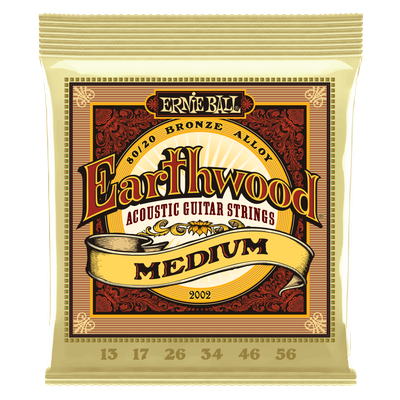
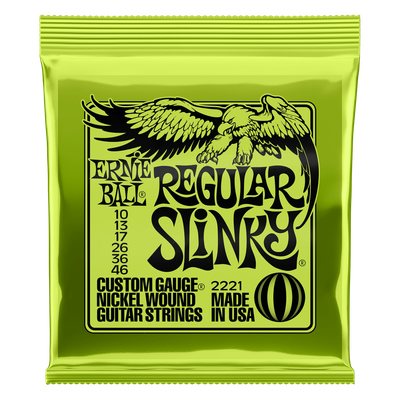
One thing that Ernie Ball, that I can always remember, was it was the packages that your eye immediately went to because of the colors. Funny enough, when I first started playing electric guitar, I got flat-lined strings because they didn't squeak. It took a while to realize that the squeaking is part of what makes it cool. There was a lot of trial and error figuring out what strings worked. I still remember a time where I would go to a guitar store and buy a single string because I couldn't afford a whole pack. To me to play great rhythm, you need stiff strings. Whatever your fingers can handle is the way to go. When you have those wobbly strings, I've seen how people play. To me that's not rock and roll. Rock and roll is about the glory of the the arm swing, the down push. I want the glory of those big chords. Think of a piano. There's that great authority when you hit a chord, the strings aren't undulating. There's a definitive quality to it. Those thicker strings make for a much more emphatic cord.
Paul Stanley:
If a song can't be played on a single instrument, it's not a good song. I've always believed that you can always embellish and lengthen something, but the core has to be a great song. You need an intro, you need a verse, you need a pre-chorus. You need a chorus that once you hear, it's not by chance that it's called a hook. It's supposed to grab you. Once you hear the hook, you should anticipate it coming back again. People break the rules, but you really should know the rules before you break them. I'm pretty satisfied with the rules so I've always stuck to them.
Paul Stanley:
It's interesting on so many levels. Whether I'm painting or whether I'm creating a song, you're taking something intangible and making something tangible. You're imagining something and making it real. To take that exercise or challenge on and work something until it's right. Then the bonus of other people liking it is great, but frankly for me, if I love it, that's good enough.
Paul Stanley:
A guitar is something that I can always go to. It's always there for me. Honestly I don't play it as often as I did, but it's so much part of the foundation of who I am and what's made me who I am. It's something I can depend on. It's something I can always go to. I have an aesthetic love of the instrument.
Paul Stanley:
The core of what we do is a kick ass rock and roll band. I've been doing this 40 plus years, which to me was completely inconceivable 40 plus years ago. For me to play in front of people around the world and have them know those songs and to have them as viable as the day I wrote them is pretty amazing. Sometimes I think about we're going to do one of the newer songs, well Lick It Up came out 30 years ago. So the fact that it's stood the test of time and is still relevant, there's a lot of satisfaction in that because a lot of what people or critics tended to consider credible or valid fell by the wayside and has become dated. But real rock and roll transcends all that. It transcends make up. Real rock and roll transcends bombs, smoke machines, lifts. Real rock and roll lasts.